
An unofficial guide to life on the picket line
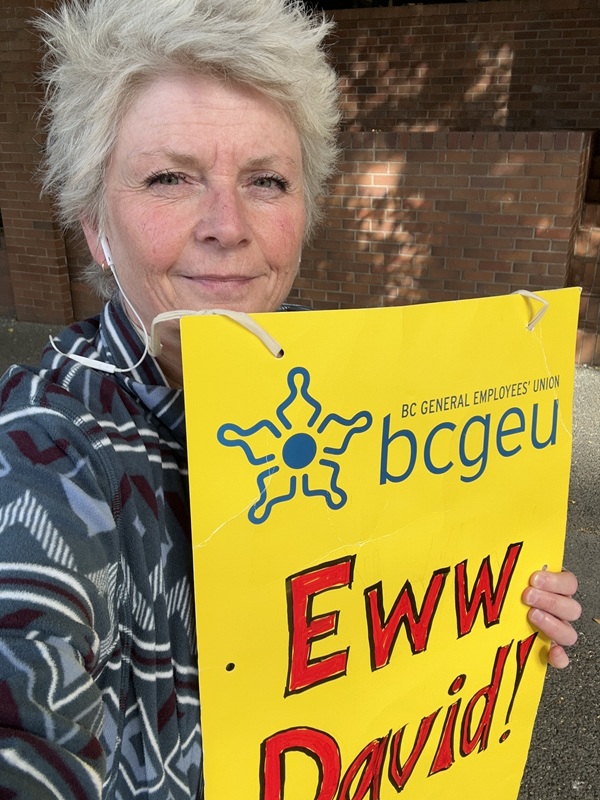
For anyone wondering what “going on strike” is actually like – or if you have friends or family going through it – let me show you the way.
I work for the British Columbia provincial government. A month ago, September 2nd, 2025 to be exact, I was one of 2,000 BC General Employees’ Union (BCGEU) members that were first to go on strike and hit the picket lines. Every week since then job action has escalated and more and more of our 34,000 members join in. At the end of September, there were more than 15,000 people involved in some form of job action. And it doesn’t appear to be ending soon.
Hitting the picket lines
Once you strike, work-life as you know it, ends. Regardless of how you feel about the current situation, you are on strike because your membership voted for it. I don’t think any of us were prepared for the daily rollercoaster of emotional and physical feels. I mean really, how hard is it to walk around wearing a picket sign?
Minus 3 days: “Wait, what?!?” As fast as the strike notice was issued, an email arrives advising you and your team will start striking in a few short days. Information is sparse. You can no longer access your work accounts or use their equipment. Picket schedules arrive 36 hours before hand. A mad rush begins figuring out how to work around prior commitments. So many questions about what to bring, transportation, and potty breaks. And you’re already exhausted.
Week 1: “Everything sucks and then you die.” Day 1 you’re anxious but fired up, adrenaline pumping, and encouraged by the horn honking from supporters as you flash your picket sign. Your walking circuit is established, you’re catching up with friends, and shaking off the shock. The four-hour shift feels like 10. You’ll do anything to avoid the porta-potties. By the end of the week you’re so ready for it to be over. Your feet hurt, you need a daily nap, your routine is all over the map, and all you want is a weekend of peace and quiet.
Week 2: “How long is this going on for?” After a few days of rest, you’re ready for more. It’s nice to see some new faces on the line. But by mid-week reality is setting in. Benefits like sick days, vacation days, stat holidays, WorkSafe coverage, your flex schedule – all suspended. Pension contributions stopped. Strike pay has you doing financial gymnastics. Shifts change up daily. Who’s picking up the kid? The dog? Did I remember to cancel that appointment? By the end of the week, you’re physically and mentally exhausted. Weekend plans are to crash & burn.
Week 3: “I think my brain leaked out my ears.” You’ve got this. You slip into the line pull your headphones on and catch up on your favourite podcast, book, or song playlist. You have caught your 100th second wind which is fueled by sugary snacks and coffee. You count circuits, play games, and scour the picket sign pile for the one that suits your mood. Suddenly you realize, you’ve forgotten how to do your actual job. What’s my password? What was I working on? Meanwhile, your Fitbit is thrilled with your daily 18K+ steps and your feet don’t hurt as much anymore. And your appreciation of daily cat naps are at an all time high.
Week 4: “I am one with the picket line.” You’re zen. You have a routine. You know where to find the cleanest washrooms. You’re basically a picketing professional now. Everything else is kind of a blur.
Week 5: “We’ve entered the strike dimension.” Remember when we were little and had underwear with the days of the week on them? Those would be helpful right now.
More than just picketing
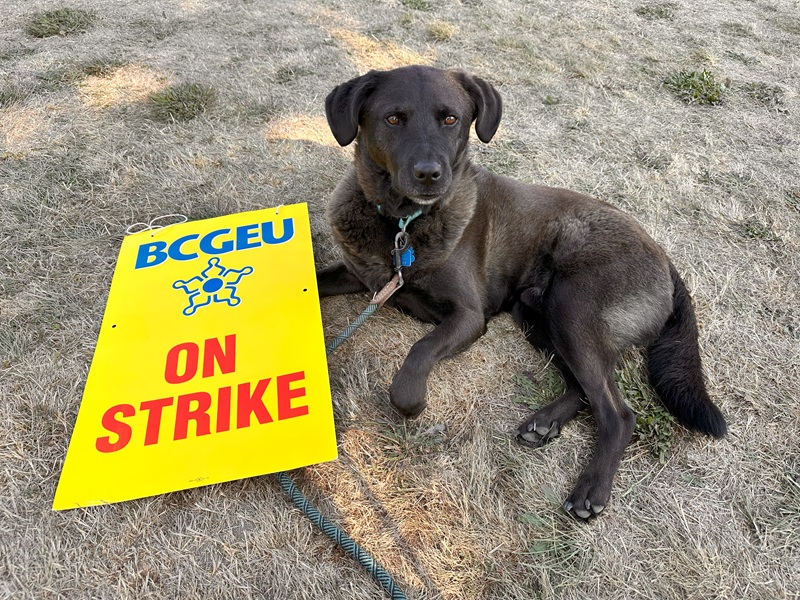
- Doggos! So many dogs are joining the lines with their people. They love it. We love it.
- We gamify everything. How many walking circuits can you do in 4 hours? Who can get the most steps in? Eye spy champions? Name and classify every type of dumpling?
- The creativity! People’s hand-written signs are brilliant. Some sites make things to hand out like friendship bracelets.
- Each strike site has its own culture. There are sites all over the province. Picketing crews range from 15 to 300 people/shift. Some are more formal, others chill. These people are what keep you going.
- Personal connections. Many of us work from home or only see one another online. This face-to-face stuff is like old times! Even though we talk a little shop on the line, we spend more time getting to know each other on a personal level.
- Handling “the gauntlet” (aka the entry into the building). We notice how our excluded coworkers handle this. Weaving their way through picketers must feel overwhelming. So kudos to those who wave and smile or stop to chat. We appreciate it.
- The bad times. Some people take out their disapproval or frustration on the picketers. Some are minor, like name calling, other times it’s physical assaults. Thankfully, these don’t happen often.
- Use your down time to make extra money. Wise words, but… yeah, no. As much as getting a side gig to make up the shortfall between your regular and strike pay makes sense, it feels overwhelming and so hard to fit in between the much needed cat naps.
Public service announcement
If you know someone on strike, they’re probably tired, financially stressed, and have temporarily forgotten how to adult. Do something fun with them, take them for a foot massage, or just let them sleep.
Passing by a picket line? Honk, wave, or stop by and chat.
At any time, coffee and snacks are always appreciated.
Even though negotiations have stalled and it feels like this is going to last forever, this too shall pass.


