Is AI the end of art as we know it?
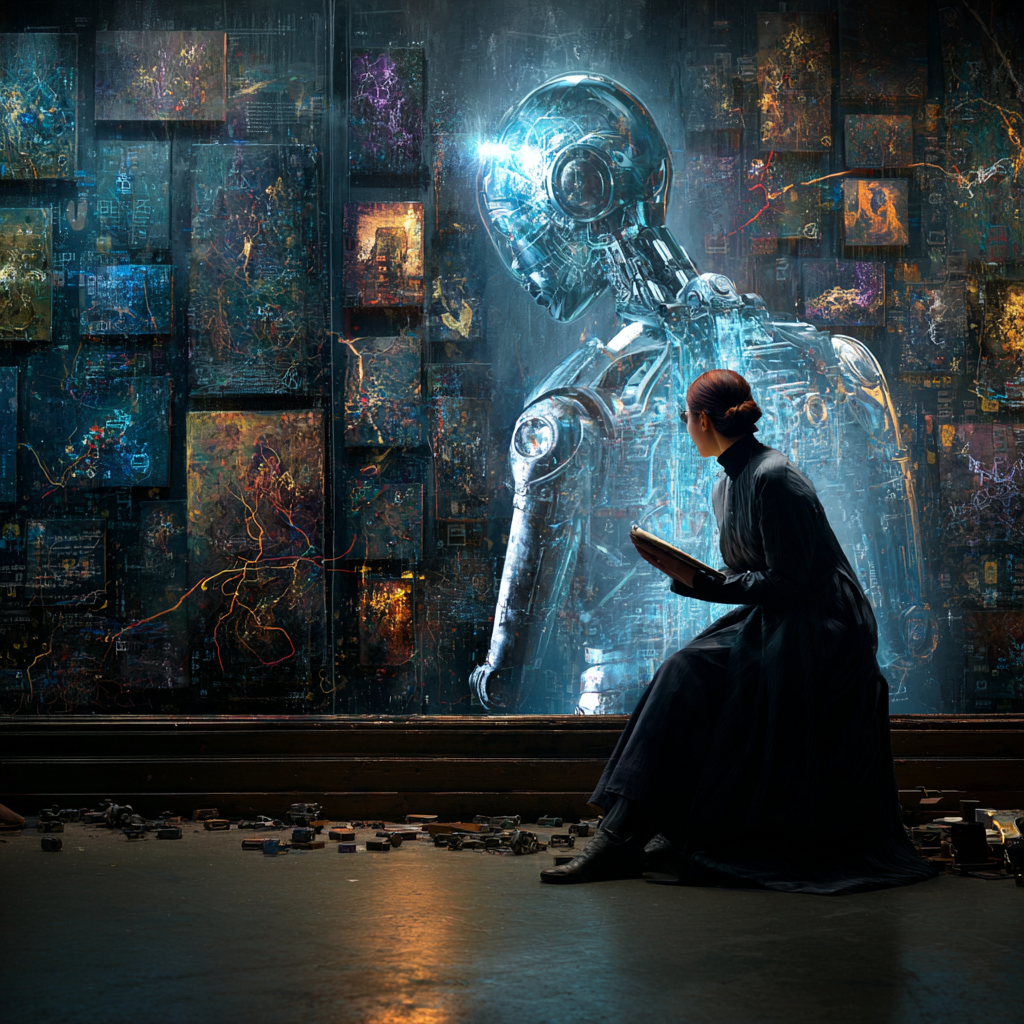
Art has always evolved alongside technology. When photography emerged in the 1800s, some painters worried it meant the end of art. Critics dismissed it as machine-made, lacking soul or craft. Photographers were mocked as button-pushers, not artists. Many believed photographs were unworthy of being called art.
It took decades before photography was widely recognized as a legitimate form of artistic expression. One that ultimately expanded, not erased, what art could be.
We’re now having a similar conversation about artificial intelligence (AI). AI-generated images have triggered the same kinds of fears and skepticism. But the questions we need to ask today aren’t just about whether AI art “counts.”
They’re about ethics, copyright, how training data is collected, who profits, and what role the artist still plays—all while the tools evolve faster than the rules that govern them.
These questions aren’t simple. But they matter. And how we answer them will shape not just the future of art—but the future of creativity itself.
My practice
I began exploring AI tools in January 2023, initially out of curiosity. What could (or couldn’t) they do? How might they shift the creative process? Could they be used in a way that felt thoughtful, transparent, and grounded in artistic intention?
Since then, I’ve used them in several ways:
- Inspiration: A visual brainstorm to helps me explore concepts, mood, style, or story direction.
- Foundational layer: A starting image I alter into something new using traditional and digital methods.
- Digital mashups: A back-and-forth process of prompting, editing, remixing, adding, deleting, and refining. Sometimes using multiple digital tools.
No matter the approach, I make the creative choices: What stays? What goes? What emotion am I trying to evoke? What visual story am I shaping?
It’s not unlike how a photographer frames a shot or edits in post-production, or how a painter pulls in multiple references or reworks a canvas over time. The tools may be new, but the creative instincts are not.
A long history of art and innovation
Artists have always experimented with new tools. The printing press made mass reproduction possible. Stained glass, neon, silk screening, and digital animation all began as technological innovations before being embraced as creative mediums. Even something as simple as the invention of the paint tube changed everything, allowing Impressionists to leave their studios and paint outdoors.
Many believed photography would render painting obsolete. Instead, artists responded by creating bold new movements like Impressionism, Fauvism, and Cubism. Explorations of light, emotion, and abstraction that photography couldn’t capture at the time.
New technology didn’t end art. It forced it to grow. Sometimes in entirely new directions. And often challenged what we thought art was supposed to be.
Change often sparks resistance. But, as professor and researcher Aaron Hertzmann states, “Can you think of a tool we regret inventing for art? I can’t.”
History shows us that artists don’t just adopt new tools. They question them, reshape them, and sometimes invent entirely new genres in response.
The bigger questions
AI-generated art has sparked heated debate. And for good reason. It’s not just about creative style or preference. For many artists, this technology feels like a threat: to their work, to their income, and to the value of human creativity itself.
And those fears aren’t unfounded.
AI models are trained on enormous datasets. Images, paintings, and illustrations collected from across the internet. Much of that content was created by real people, often without their knowledge or consent. Artists are seeing their work imitated, remixed, or mimicked by machines that learned from them but don’t credit them.
Some see it as outright theft. Others point to deeper concerns around profiting from unpaid creative labour. There are other questions:
- Who owns the final image?
- Can you copyright something generated by a machine?
- If AI tools get faster and cheaper, what happens to working artists?
- How do we credit artistic influence when the source is invisible?
These aren’t edge-case hypotheticals. They’re here, right now, reshaping industries and livelihoods. And they go far beyond the art world into journalism, education, entertainment, and more.
That’s why we can’t dismiss this as “just a tool” debate. These are questions about power, fairness, and accountability in a system that’s still being built. And often built without the people most affected by it.
Exploring the in-between
I don’t have all the answers. No one does. But I do know this. We’re in the middle of something big. Talking about it is important but so is exploring it. You can’t fully understand these tools, their potential, their limitations, or issues unless you engage with them directly. Observation alone doesn’t tell the whole story.
I believe we can be worried about the harms while also being excited about the artistic potential of these tools.
Like many others, I’m deeply uneasy about how some AI tools have been developed and deployed. Have people’s creations have been scraped, sampled, or mimicked without credit or consent? These are real harms, often invisible in the final output but deeply felt by the people affected.
At the same time, I’m also intrigued by what these tools can do when used with intention. I believe artists and technology have the potential to push creative boundaries together. To create things neither could accomplish alone. When that collaboration is built on transparency and respect, it opens space for new forms of expression, not just automation.
I also believe we need to separate the artistic questions from the economic ones. Whether someone likes the aesthetics of AI-assisted work is subjective. But the concerns about copyright, compensation, and consent aren’t just about taste—they’re labour issues. And they don’t stop at visual art. These same dynamics are playing out across writing, music, video, and more.
“What should be done to protect today’s artists? I do not know, but I believe it is fundamentally a labor issue, not an art issue.” ~Aaron Hertzmann
These beliefs shape how I work. I aim to be transparent about my process. I reflect on where my images come from. And I try to ensure that curiosity never overrides care. I don’t think that’s too much to ask—from myself, or from the tools we choose to build.
Between the extremes
The conversation around AI and art often gets stuck in two extremes. It’s either saviour or destroyer. It oversimplifies what’s happening and assumes that technology affects everyone the same way.
“These extremes are both absurd and counterproductive to real understanding; they will lead to bad policy and/or preparing people poorly for the future.” ~Aaron Hertzmann
But most change isn’t all good or all bad. It’s mixed, messy, and uneven.
Photography didn’t end painting, but it pushed painters to explore light, mood, and abstraction in new ways. The invention of film didn’t destroy live theatre, but it changed how actors trained and how stories were told. And streaming didn’t kill music, but it did shift how musicians earn a living.
Every shift brings short- and long-term effects. What feels disruptive in one moment can lead to new opportunities later on. And what feels empowering at first can have serious downsides over time.
That’s why we need better conversations. Ones grounded in clarity, nuance, and the willingness to look at the whole picture, not just the headlines.
What we can do
Generative AI has the potential to be a powerful tool for creators. It opens new ways to make and share, helps more people step into creative roles, and could expand access to knowledge, inspiration, and expression. But that’s only possible if we shape its use with care and intention.
This moment isn’t just about tools—it’s about choices. And everyone has a role to play.
Whether you’re an artist, a technologist, a policymaker, or just someone trying to make sense of all this, there are ways to take part:
- Support ethical practices. Ask artists, platforms, and companies how they use AI. Look for creators who are transparent about their process. Choose tools that respect consent, credit, and community.
- Stay curious and critical. Don’t stop at the headlines. Learn how these tools work. Ask who benefits, who’s at risk, and what trade-offs are being made.
- Join the conversation. That might mean showing up at community events, contributing to policy consultations, or just asking better questions in everyday discussions.
- Back the people doing it right. Whether it’s through funding, sharing, or visibility—help amplify artists and technologists who are using AI responsibly and creatively.
We can’t slow down the pace of change, but we can shape the outcomes. And that starts with more people feeling informed, involved, and heard.
Closing thoughts
This isn’t the first time a new technology has raised alarms in the art world. When photography emerged, it didn’t erase painting. It pushed artists in bold new directions. Impressionism, abstraction, and surrealism flourished in response to what cameras couldn’t capture. What once looked like the “end of art” became the spark for something entirely new.
I see AI in a similar light. Not as a replacement for humans, but as a tool. One that opens space for collaboration, experimentation, and new forms of expression. Used well, it can expand the artist’s palette.
I can imagine a future where artists and AI are creative partners. Artists will adapt, finding new ways to express emotion, tell stories, and bring beauty into the world using tools we’re only just beginning to understand. Artists have always risen to the moment, finding fresh ways to create when everything around them is shifting.
At the end of the day, I didn’t write this to convince anyone that AI art is good or bad, real or fake. I wrote it in hopes it would offer context and encourage thoughtful, informed conversation.
I recognize the valid concerns: about consent, compensation, originality, and creative labor. I also see the creative potential in these tools when used with transparency, intention, and respect.
That’s the space I try to navigate. I don’t claim to have all the answers. But I believe that wrestling with these questions openly, and acknowledging both the risks and the possibilities, is part of the work.
This isn’t the end of art as we know it. But it might be the start of something new. And it’s up to us to shape it.
Additional reading:
- 9 Inventions that changed the way we make art | Artsy
- When machines change art | Aaron Hertzmann
- Art innovation: Embracing new tools in the world of creativity | Arts, Artists, Artwork
- Understanding CC licenses and generative AI | Creative Commons
- A Canadian blueprint for trustworthy AI governance | Policy Options


